
Listen up, folks! I've got something that'll make your taste buds do a happy jig. It's my Dutch Oven Irish Beef and Stout Stew recipe, and this isn't your average meat-and-potatoes situation. This is the dish that transforms ordinary ingredients into a symphony of flavors that'll have your dinner guests convinced you've been hiding culinary school credentials.

I stumbled upon this recipe during what I call "The Great Kitchen Disaster of 2018" when my sister-in-law Barb was visiting with her picky-eater husband. Three attempts and one minor kitchen fire later, I struck culinary gold. Now it's my go-to recipe for impressing guests and bringing comfort on cold evenings.
Why This Dutch Oven Stew Will Change Your Life
Most stews promise depth but deliver disappointment – sad, watery beef tea with floating vegetable islands. This recipe solves that problem entirely. My beer-snob buddy Dave took one bite and fell silent for a full minute – a miracle if you know Dave.
The Dutch oven is the true hero here. For years, my flame-colored Dutch oven gathered dust as an expensive decoration. My wife kept asking, "When are you actually gonna use that thing?" Now it's my most-used kitchen tool because it transforms tough chuck roast into melt-in-your-mouth magic through perfect heat distribution and moisture retention.
What makes this stew exceptional:
- The long, slow cooking process breaks down collagen in the meat
- The stout beer creates a complex flavor foundation without bitterness
- The combination of bacon fat and beef creates multiple layers of umami
- Strategic addition of potatoes ensures perfect texture
The Ingredients That Make This Stew Legendary
The Beef: Chuck roast is non-negotiable here. It has the perfect meat-to-fat ratio that becomes ridiculously tender after a few hours of simmering. I once tried making this with an expensive cut because the butcher convinced me to "elevate" my stew. The result? My wallet cried, and the stew lost its soul. The humble chuck roast contains collagen that breaks down during slow cooking, creating that silky mouthfeel we're after.
The Guinness: The stout adds deep, complex flavors without making the stew bitter (a common concern). The roasted barley in Guinness brings coffee and chocolate notes that complement the beef perfectly. My neighbor Tom, who "hates beer in food," had three bowls before I revealed the secret ingredient. His shocked expression was worth framing.
The Supporting Cast:
- Bacon: Provides a smoky foundation and glorious fat for browning the beef
- Aromatics: Onions and garlic build the flavor base
- Worcestershire sauce: Adds umami depth and balances the richness
- Fresh herbs: Thyme and parsley bring brightness to cut through the richness
The Cooking Process (Or: How I Learned to Stop Worrying and Love My Dutch Oven)
Browning the beef properly is the most critical step. When I rushed this step during my first attempt, I ended up with "beef-flavored warm water with vegetables." My teenage son asked if we could order pizza instead. Harsh but fair.
The Crucial Steps:
- Season the flour before coating the beef This tip from my mother-in-law distributes flavor throughout and helps create a rich gravy later.
- Brown in batches Overcrowding the pot steams the meat instead of browning it. Patience here pays enormous dividends in flavor.
- Deglaze like you mean it When you add the Guinness, scrape up every last browned bit from the bottom. Those flavor nuggets (what my wife calls "fond") contain concentrated beef essence and caramelized proteins that form the backbone of your stew.
- Low and slow wins the race A gentle simmer transforms tough cuts into tender morsels while allowing the flavors to meld. Rushing this process is like skipping to the end of a great book – you'll miss all the character development.
Common Pitfalls and How to Avoid Becoming a Kitchen Disaster Like Me
The Bitterness Issue: Some folks complain about Guinness making stew bitter. The fix? Three things:
- Simmer low and slow – the longer cooking time mellows everything
- Make sure to reduce the Guinness slightly before adding other liquids
- Balance with the natural sweetness from onions and carrots
Potato Problems: I've had potatoes disintegrate into mush and potatoes remain crunchy while the meat was falling apart. The solution is twofold:
- Cut them into evenly sized 1-inch chunks
- Add them later in the cooking process (about an hour before finishing)
Thickness Troubles: If your stew isn't thick enough after cooking, add a roux – equal parts butter and flour cooked together until golden, then stirred in gradually. It works like a charm and binds all the flavors together while giving the stew that velvety texture.
Choosing Your Dutch Oven Companion
Dutch ovens are the reliable SUVs of the kitchen world – practical, dependable, and surprisingly versatile. Mine has outlasted relationships, jobs, and my brief, embarrassing attempt at becoming a home fitness YouTuber.
What to Look For:
- Size: At least 6 quarts for a family-sized stew
- Material: Cast iron with enamel coating for easy cleanup and no metallic taste
- Lid Fit: A tight-fitting lid to trap moisture and flavor
- Handle Design: Comfortable, heat-resistant handles you can grip with oven mitts
I use a Le Creuset that my wife had been hinting about for our anniversary. Is it expensive? Yes. Has it been worth every penny? Absolutely. Lodge makes excellent, more affordable options that deliver similar results without requiring a second mortgage. The important thing is heavy walls and that tight-fitting lid to create the perfect cooking environment.
The Moment of Truth: Serving Your Masterpiece
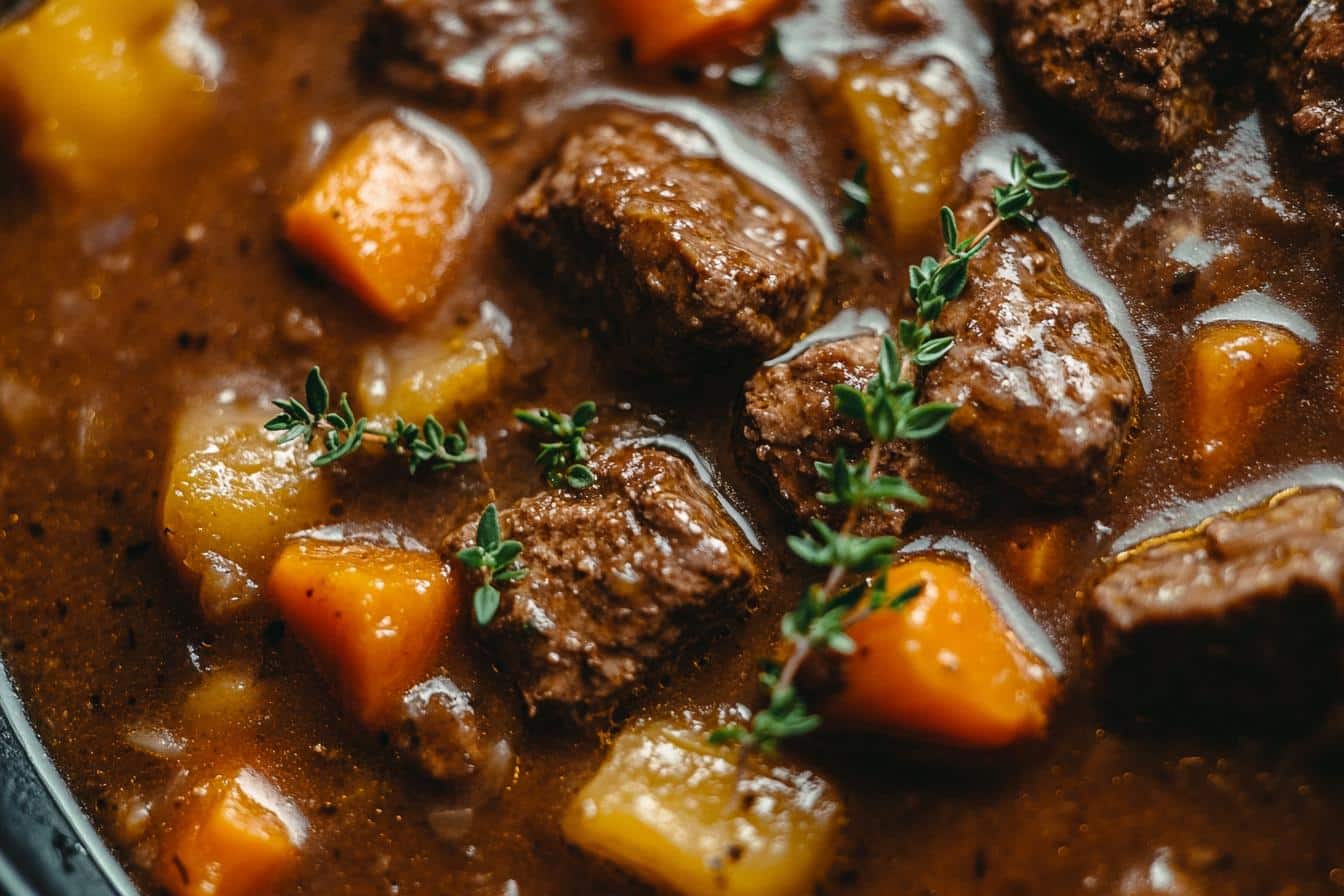
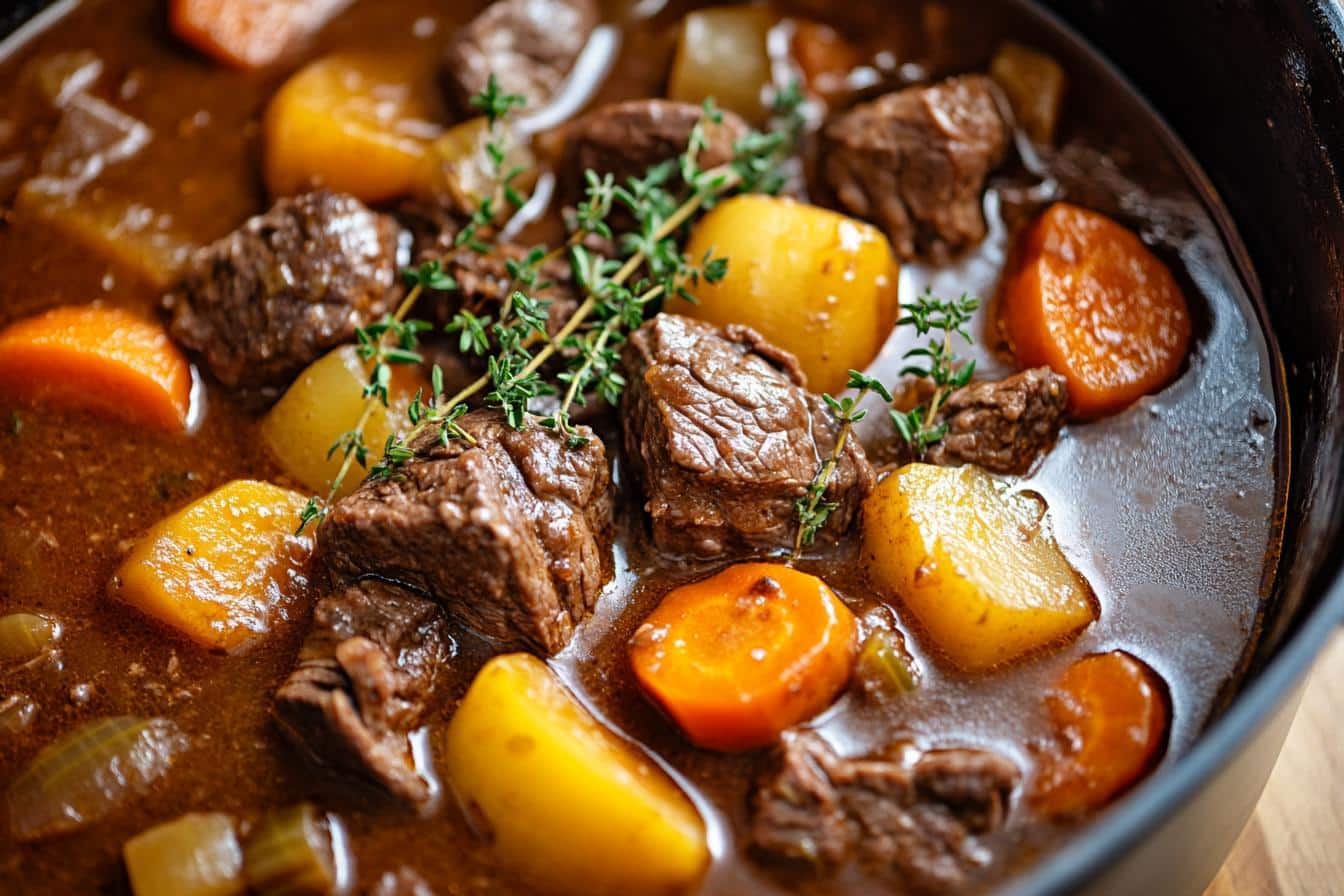
When you finally lift that lid after hours of wonderful aromas torturing everyone in the house, you'll reveal a masterpiece. The meat should be fork-tender, the gravy rich and silky, and the vegetables perfectly cooked.
Serving Suggestions:
- Crusty sourdough bread for sopping up every last drop
- A simple green salad with vinaigrette to balance the richness
- A glass of the same stout you used in cooking (or a robust red wine)
I once made this for my boss and his wife. Now he requests it EVERY TIME they visit, and I've created a monster. But watching someone go for thirds makes me feel like a culinary genius, so I guess there are worse problems to have!
This stew actually improves overnight as the flavors continue to develop, making it perfect for meal prep or entertaining without day-of stress. Just reheat it gently on the stove, and everyone will think you've been cooking all day.
The beauty of this recipe lies in its forgiving nature. Had a rough day at work? Chop the vegetables a bit haphazardly. Feeling fancy? Add a splash of red wine alongside the Guinness. The core technique will still deliver incredible results.
My family now requests this stew at the first hint of cool weather. There's something deeply satisfying about creating a dish that brings people together around the table, conversation flowing as freely as the hearty stew.
OTHER RECIPES YOU'LL LOVE

Irish Beef And Stout Stew
Ingredients
- 3 pounds beef chuck roast cut into 2-inch cubes
- 3 tablespoons all-purpose flour
- 1 teaspoon salt
- ½ teaspoon black pepper
- 3 tablespoons olive oil
- 4 slices bacon diced
- 2 medium yellow onions chopped
- 4 cloves garlic minced
- 1 14.9-ounce can Guinness Draught beer
- 4 cups beef broth
- 1 tablespoon Worcestershire sauce
- 4 sprigs fresh thyme
- 2 bay leaves
- 3 pounds russet potatoes peeled and cut into 1-inch pieces
- 2 carrots cut into 1-inch pieces
- 2 tablespoons chopped fresh parsley leaves
Instructions
- Preheat oven to 350 degrees F (175 degrees C).
- In a large bowl, toss the beef with the flour, salt, and pepper until evenly coated.
- Heat the olive oil in your Dutch oven over medium-high heat.
- Cook the bacon until crisp. Remove to a paper towel-lined plate, reserving the fat in the pot.
- Brown the beef in batches (about 3-4 batches for 3 pounds) in the bacon fat, allowing space between pieces. This takes patience but creates the foundation for incredible flavor.
- Remove the browned beef and set aside.
- Add the onions to the pot and cook until softened, about 5 minutes.
- Add the garlic and cook until fragrant, about 1 minute.
- Pour in the Guinness, scraping up any browned bits from the bottom of the pot with a wooden spoon.
- Let the Guinness reduce slightly (about 2 minutes), then stir in the beef broth, Worcestershire sauce, thyme, and bay leaves.
- Return the beef and bacon to the pot.
- Bring the stew to a boil, then reduce heat to low, cover, and simmer for 2 hours, or until the beef is very tender.
- Add the potatoes and carrots. Simmer for 1 more hour, or until the potatoes are tender but still hold their shape.
- Remove the thyme sprigs and bay leaves.
- Season with additional salt and pepper to taste.
- Stir in the parsley just before serving.
- Serve hot with crusty bread.
Leave a Reply