
Let me take you back to a memory: a cold Sunday afternoon, the house filled with the irresistible aroma of slow-cooked meat, and my grandma’s Dutch oven working overtime. That’s where my love for beef brisket began. It’s more than a meal—it’s an experience, one that brings warmth and togetherness to any table.

Dutch oven beef brisket is comfort food at its finest: tender, juicy, and rich with flavor. Whether you’re feeding a crowd, prepping meals for the week, or simply indulging in a hearty dish, this recipe will become your go-to. Let’s dive into what makes this classic dish so special and how to make it perfectly every time.
Why a Dutch Oven? Because Science, That’s Why!
The Science Behind Slow Cooking
A Dutch oven isn’t just another pot; it’s like the Rolls Royce of cookware. With its heavy cast iron and tight-fitting lid, it creates the perfect environment for slow cooking. The heat distributes evenly, meaning every inch of that brisket gets the TLC it deserves.
Slow cooking works wonders on tougher cuts of meat like brisket, breaking down collagen and turning it into gelatin—science talk for, “it’s gonna melt in your mouth.” The Dutch oven locks in moisture and flavors like no other cookware can.
Comparing Cooking Methods
Sure, a slow cooker is convenient, and roasting pans have their place, but neither can match the versatility of a Dutch oven. Slow cookers don’t allow you to sear the meat first, and roasting pans can dry out brisket if you’re not careful. The Dutch oven gives you the best of both worlds: a beautiful sear followed by gentle, consistent heat for hours.
Example: I once tried making brisket in a slow cooker. While the meat was tender, it lacked the depth of flavor and rich caramelized crust I get every time I use my Dutch oven.
Ingredients and Substitutions
Core Ingredients for Success
Here’s what you’ll need:
- Brisket: The star of the show. Opt for a flat-cut for uniform slices or a point-cut for more marbling and flavor.
- Red wine and beef broth: These form the base of a rich braising liquid.
- Garlic, thyme, and onions: Aromatic essentials.
- Carrots and potatoes: Not only do they add flavor, but they also serve as a built-in side dish.
Common Substitutions
Not a wine fan? No worries! Substitute with beef broth and a splash of balsamic vinegar for that tangy depth. Prefer sweeter notes? Try pomegranate juice—it’s surprisingly good!
Pro Tip: Always season generously. Brisket is a big cut of meat, and under-seasoning is a common mistake.
Step-by-Step Instructions
Preparing the Brisket
Start by trimming excess fat, but don’t overdo it—leave a thin layer to keep the meat moist. Season the brisket liberally with salt, pepper, and your favorite spice rub.
Searing for Flavor
This step is non-negotiable. Heat your Dutch oven until it’s almost smoking, then sear the brisket on all sides. The goal? A deep, golden crust that locks in flavor.
Tip: Searing adds a layer of complexity to the brisket’s flavor, turning simple ingredients into something extraordinary.
Braising in the Dutch Oven
Layer your onions, garlic, and carrots in the bottom of the pot. Place the brisket on top and pour in your braising liquid (red wine, broth, or a mix). Cover tightly and transfer to a 275°F oven.
Pro Tip: Resist the urge to check too often—every time you lift the lid, you release precious steam.
Serving Suggestions
Pairing Options
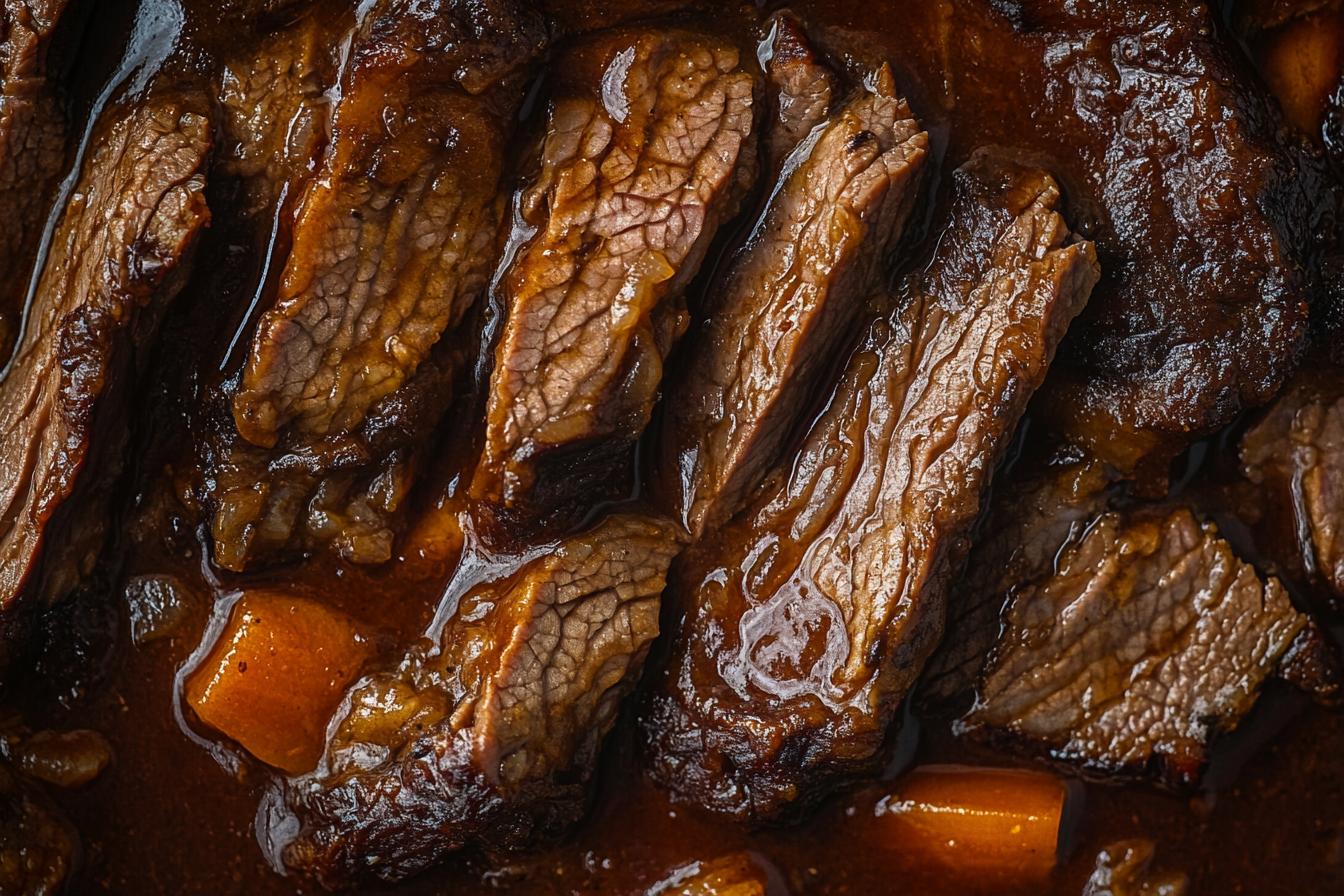
Brisket pairs beautifully with creamy mashed potatoes, roasted vegetables, or warm, crusty bread. Want to get creative? Serve it shredded in tacos or piled high on a sandwich with a tangy slaw.
Leftover Ideas
Don’t let leftovers go to waste! Use brisket in breakfast hash, quesadillas, or even on top of a loaded baked potato.
Advanced Tips and Techniques
Perfecting the Texture
Cook it low and slow—this isn’t a race. A brisket cooked too quickly will be tough and dry, so take your time and let the Dutch oven work its magic.
Tip: Cook at 275°F for at least 3–4 hours, depending on the size of your brisket. The meat should be fork-tender.
Resting the Meat
Letting the brisket rest is crucial. This step allows the juices to redistribute, ensuring every bite is juicy and flavorful.
Carving Brisket Like a Pro
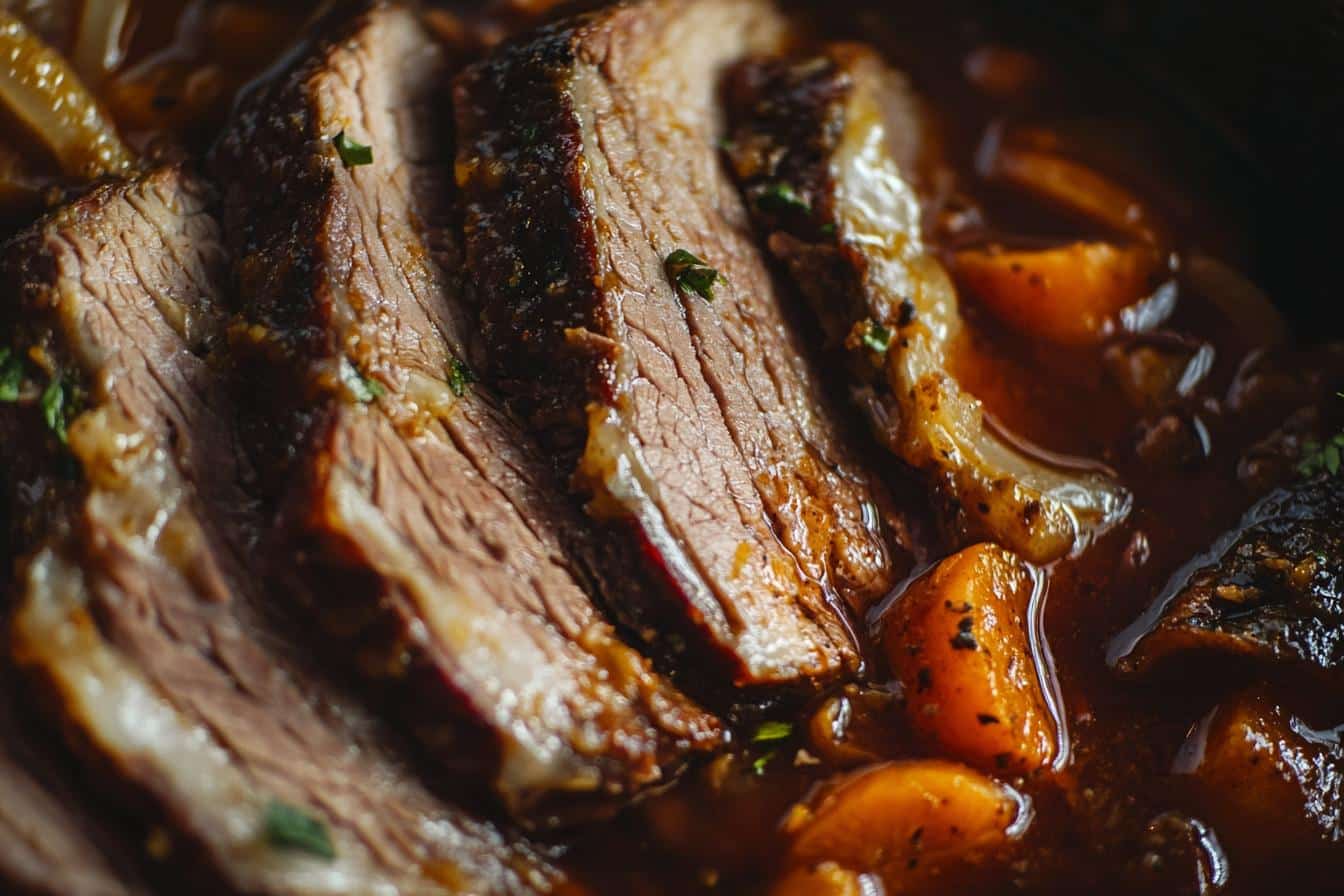
Always slice against the grain. This shortens the meat fibers, making each bite tender and easy to chew.
How to Store and Reheat Dutch Oven Beef Brisket
Proper Storage
Cool the brisket completely before storing it in an airtight container with some of the braising liquid to keep it moist. It’ll last up to four days in the fridge or three months in the freezer.
Reheating Tips
Reheat in the oven at 300°F, covered, until warmed through. For extra moisture, spoon some of the reserved liquid over the meat before reheating.
Overall, Dutch oven beef brisket is a dish that’s as much about the process as it is the result. The slow cooking, the rich aromas, and the joy of gathering around the table all make it an experience worth savoring.
OTHER RECIPES YOU'LL LOVE
Dutch Oven Beef Brisket
Ingredients
- 3-4 pounds beef brisket flat-cut for slices or point-cut for more marbling
- 2 tablespoons olive oil
- 1 large onion sliced
- 4 garlic cloves minced
- 2 cups beef broth
- 1 cup red wine or beef broth with 2 tablespoons balsamic vinegar as a substitute
- 3 medium carrots peeled and cut into chunks
- 2 medium potatoes quartered
- 2 sprigs fresh thyme
- 2 sprigs fresh rosemary
- 1 teaspoon smoked paprika
- 1 teaspoon ground black pepper
- 2 teaspoons kosher salt
Instructions
Prepare the Brisket
- Trim excess fat from the brisket, leaving a thin layer for moisture and flavor.
- Season the brisket generously on all sides with salt, pepper, and smoked paprika. Let it sit for 10 minutes while you prep the other ingredients.
Sear for Flavor
- Heat olive oil in the Dutch oven over medium-high heat until shimmering.
- Sear the brisket for 2-3 minutes on each side, forming a golden-brown crust. Set aside.
- Pro Tip: Don’t skip this step—searing locks in the flavor and adds depth to the dish.
Build Your Flavor Base
- In the same Dutch oven, add onions and cook for 2 minutes until softened.
- Add garlic and sauté for 30 seconds until fragrant.
Braise the Brisket
- Place the seared brisket back into the Dutch oven.
- Pour in the beef broth and red wine, ensuring the brisket is about halfway submerged.
- Add carrots, potatoes, thyme, and rosemary around the meat.
- Bring the liquid to a gentle simmer, then cover with the lid.
Slow Cook in the Oven
- Preheat your oven to 275°F (135°C).
- Transfer the Dutch oven to the middle rack. Cook for 3–4 hours, checking occasionally to ensure the liquid hasn’t evaporated (add more broth if needed).
- When is it done? Use a meat thermometer to check—brisket should reach an internal temperature of 195°F to 205°F for optimal tenderness.
Rest the Meat
- Remove the Dutch oven from the oven and carefully transfer the brisket to a cutting board.
- Tent it loosely with foil and let it rest for 15-20 minutes.
Serve and Enjoy
- Slice the brisket against the grain for maximum tenderness.
- Spoon the braising liquid over the slices for added flavor. Serve with the carrots, potatoes, and your choice of sides.
Leave a Reply