
Y'all, I've been smoking meat since before my kids could walk, and there's nothing—and I mean NOTHING—that compares to the lip-smacking deliciousness of authentic North Carolina pulled pork with that tangy vinegar sauce. I'm gonna share my go-to recipe for making the most mouthwatering pulled pork you've ever tasted, using a bone-in pork shoulder that smokes for 8-10 hours til it's practically falling apart.

I remember the first time I tried making pulled pork. It was for my buddy Dave's 40th birthday, and let me tell ya, it was a DISASTER. The meat was tough as leather, and everyone just smiled politely while chewing... and chewing... and chewing. But that failure set me on a decade-long quest to master the art of pulled pork. Now my weekend cookouts are legendary in the neighborhood!
The Holy Trinity: Smoke, Time, and Patience
Listen up, folks. Making proper pulled pork isn't something you can rush. My wife Jenny always rolls her eyes when I start prepping at 5 AM, but she stops complaining when dinner rolls around!
There are several ways to cook your pulled pork, but smoking is the most traditional method—and in my opinion, the most flavorful. When you're smoking, you wanna aim for about 250 degrees F and use hickory or applewood chips. The smoke infuses the meat with this incredible flavor that you just can't get any other way. Think of the smoke as tiny flavor messengers, penetrating deep into the meat fibers and transforming an ordinary pork shoulder into something transcendent. My neighbor Tom swears by pecan wood, but we nearly came to blows over this once after a few too many beers.
If you don't have a smoker, don't sweat it. You can use a slow cooker for convenience, though you'll miss out on that smoky flavor. Set it on low for about 8-10 hours and let it do its thing while you go about your day. Pro tip: Add a teaspoon of liquid smoke to the cooking liquid to mimic some of that smoky goodness. I've used this method when we had a snowstorm and couldn't get to the outdoor smoker.
Oven roasting is another solid option. Preheat to 325 degrees F, put your seasoned pork in a roasting pan with some liquid at the bottom (apple juice works great), cover tightly with foil, and roast for about 4 hours. Then uncover and crank the heat to 425 to get that crispy exterior. The contrast between that bark-like exterior and the tender meat inside is what separates good pulled pork from great pulled pork.
The Magic Elixir: North Carolina Vinegar Sauce
Now we're getting to the good stuff! North Carolina pulled pork without vinegar sauce is like me without my dad jokes—technically possible but why would you want that?
In Eastern North Carolina, they keep it simple: vinegar, red pepper flakes, black pepper, and salt. No tomato products whatsoever. It's tangy, spicy, and cuts through the richness of the pork like nobody's business. This sauce isn't just a condiment—it's the perfect counterbalance to fatty, rich pork. The acidity from the vinegar actually helps break down the proteins in the meat, making each bite more tender.
Western-style sauce (sometimes called Lexington-style) adds a bit of ketchup or tomato sauce and often incorporates Texas Pete hot sauce. It's a touch sweeter but still has that vinegar punch. My brother-in-law from Lexington would disown me if I didn't mention this variation. The debate between Eastern and Western styles is serious business in North Carolina—people have ended friendships over less!
I gotta tell ya, the first time I tasted authentic vinegar sauce at this little roadside joint in Wilson, NC, I nearly fell outta my chair. It was like nothing I'd ever experienced—sharp, tangy, with just the right amount of heat. My life was changed forever, I swear. My buddy Carl laughed so hard at my reaction that beer came outta his nose.
Serving It Up Right
There's nothing better than a classic pulled pork sandwich piled high with meat and topped with coleslaw. The cool, crisp slaw provides the perfect contrast to the warm, tender pork. That temperature and texture contrast is what makes this combo so satisfying—like a perfect yin and yang on a bun. My daughter calls this combo "heaven on a bun," and she ain't wrong.
Speaking of buns—this matters, folks! You've got options:
- Hamburger buns: The classic choice. Soft, simple, gets the job done.
- Brioche buns: A bit fancy but adds a buttery sweetness that plays well with the tangy pork.
- Potato rolls: My personal favorite. Slightly sweet and sturdy enough to hold up to all that saucy goodness without falling apart halfway through your sandwich.
Don't limit yourself to sandwiches though. I've thrown pulled pork on nachos during game day (GO PANTHERS!), stuffed it in tacos for a fusion Tuesday dinner, and even topped pizzas with it. Try it in a quesadilla with pepper jack cheese—game changer! My wife thinks I'm obsessed, and she might be right.

What's On The Side?
You can't have pulled pork without proper sides, am I right? The classics are baked beans, cornbread, and potato salad. There's something about the sweetness of the beans with the tangy pork that just works. It's all about balance—the sweet, the savory, the tangy, the spicy.
When I'm feeling a bit more ambitious, I'll whip up some collard greens or mac and cheese. For the collards, simmer them low and slow with a ham hock, a splash of vinegar, and a pinch of red pepper flakes until they're tender but still have some bite. My secret to amazing collards? A splash of that same vinegar sauce you're using for the pork. Trust me on this one. My grandmother would be rolling in her grave if she knew I was sharing family secrets like this.
For mac and cheese, go for a sharp cheddar base and add a bit of smoked gouda or smoked paprika to echo the flavors in your pork. The creaminess pairs beautifully with the tangy meat.
The Meat of the Matter
Let's talk about meat, baby! The cut you choose matters. Pork shoulder is what you want, specifically the part called Boston butt (which, confusingly, comes from the upper part of the front shoulder). Sometimes you'll see it called picnic roast, which is from the lower part of the shoulder.
Fat content is crucial here—you WANT that marbling. It'll render down during the long cooking process and keep your meat juicy and flavorful. Think of those fat streaks as built-in basting that slowly melts away, continuously moistening the meat from the inside out. I learned this the hard way when I tried to be "healthy" once and trimmed too much fat. My son still brings up that disappointment at family gatherings.
When shopping, look for meat with good color (pinkish-red, not pale) and plenty of marbling throughout. If you're friendly with your butcher, ask for a bone-in piece—cooking meat on the bone always adds flavor. And don't worry about the size—pulled pork leftovers are gold!
Pro Tips from Years of Smoky Experiments
After years of trial and error (mostly error), I've gathered some wisdom I'm generously sharing with you:
Sauce Variations: If you like Texas Pete, add it. If you want it sweeter, add more brown sugar. Make it your own! For a fun twist, try adding a splash of bourbon or apple juice to your sauce for depth of flavor. My wife likes hers with a touch of honey, which isn't traditional but tastes amazing.
"Low and Slow" is the GOSPEL: I cannot stress this enough. Low temperature, long cooking time. Rushing pulled pork is like rushing a good relationship—it just don't work, folks. The collagen in the meat needs time to break down properly—that's what transforms tough shoulder meat into tender, shreddable perfection.
Spritz It Good: Keep a spray bottle filled with apple juice or a vinegar mixture and spritz the meat every hour or so during cooking. This adds flavor and keeps the exterior from drying out. The evaporating liquid also helps attract more smoke to the meat's surface, enhancing that smoky flavor. I learned this trick from my uncle Bobby who wins the county BBQ competition almost every year.
Rest Before You Pull: Let that beautiful hunk of meat rest for at least an hour before shredding. It'll reabsorb juices and be more tender. This isn't optional—it's mandatory! During this rest, the internal temperature equalizes and the meat fibers relax, making for juicier meat that shreds more easily. I know it's hard to wait, but control yourself!
Leftovers Are Your Friend: Pulled pork freezes beautifully. Portion it out, freeze it, and you've got quick dinners for weeks. Just reheat with a splash of sauce to keep it moist. Pro tip: Freeze in flat zip-top bags with all the air pressed out—they thaw quicker and take up less freezer space. This has saved my behind on many busy weeknights when the kids are hangry and I've got nothin'.

I've made this recipe probably a hundred times, and I gotta say, the secret isn't just in the ingredients or the technique—it's in the love you put into it. Sounds cheesy, I know, but it's true! BBQ is more than food in North Carolina; it's practically a religion.
There's something almost spiritual about tending to a smoker all day, watching the temperature, adjusting vents, adding wood chips, and patiently waiting for that moment when the meat reaches perfection. It teaches you patience in a world that's all about instant gratification.
OTHER RECIPES YOU'LL LOVE
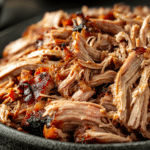
North Carolina Style Pulled Pork with Vinegar Sauce
Ingredients
- 8-10 pound bone-in pork shoulder Boston butt
- 2 tablespoons Kosher salt
- 2 tablespoons coarse black pepper
- 2 tablespoons smoked paprika
Mop Sauce:
- 1 cup apple cider vinegar
- 1 cup beer I use whatever I'm drinking that day
- 1 tablespoon Worcestershire sauce
- 2 teaspoons red pepper flakes
Vinegar BBQ Sauce:
- 2 cups apple cider vinegar
- 1 ½ cups water
- ½ cup ketchup omit for a more authentic Eastern North Carolina sauce
- ¼ cup brown sugar
- 2 tablespoons salt
- 1 tablespoon black pepper
- 1 tablespoon red pepper flakes
Instructions
- Preheat your smoker for indirect smoking at 250 degrees F. Hickory or applewood is recommended. I usually start this process way too early in the morning while my family is still asleep.
- In a small bowl, combine the salt, pepper, and paprika to create the rub. Apply liberally on all sides of the pork shoulder. Don't be shy—that meat needs seasoning! Work the rub into all the nooks and crannies.
- Place the rubbed shoulder in the smoker and close the lid. This is where the waiting game begins. Position the meat fat-side up so it self-bastes as it cooks.
- In a glass bowl, combine all the ingredients for the mop sauce. Apply the mop sauce to the pulled pork every hour using a BBQ mop or a food-safe spray bottle. This is my meditation time—just me, the meat, and the smoke.
- Smoke the pork shoulder, while mopping hourly, for 8-10 hours or until the internal temperature of the meat reaches 200 degrees F. Temperature is more important than time here, folks! You're looking for that magical moment when your thermometer slides into the meat like it's going through butter.
- While the pork is smoking, prepare the vinegar BBQ sauce. In a saucepan, combine all ingredients and bring to a boil. Reduce heat and simmer until the sugar dissolves. Let it cool—it gets better as it sits. Store in the refrigerator up to two weeks.
- Once the pork is done, remove it from the smoker and let it rest for at least 1 hour before shredding. I wrap mine in foil, then a towel, and place it in a cooler. Works like a charm and keeps it hot for hours!
- Shred the pork and mix with your desired amount of vinegar BBQ sauce. I use two forks, but my buddy Rick uses these plastic "meat claws" that make him look like Wolverine. Remove any large pieces of fat or gristle as you go.
- Serve on buns with coleslaw. For the ultimate experience, toast those buns lightly before piling on the meat. Prepare for compliments and requests for the recipe.
Leave a Reply